The Magic of Loose Parts Play!
What are loose parts?
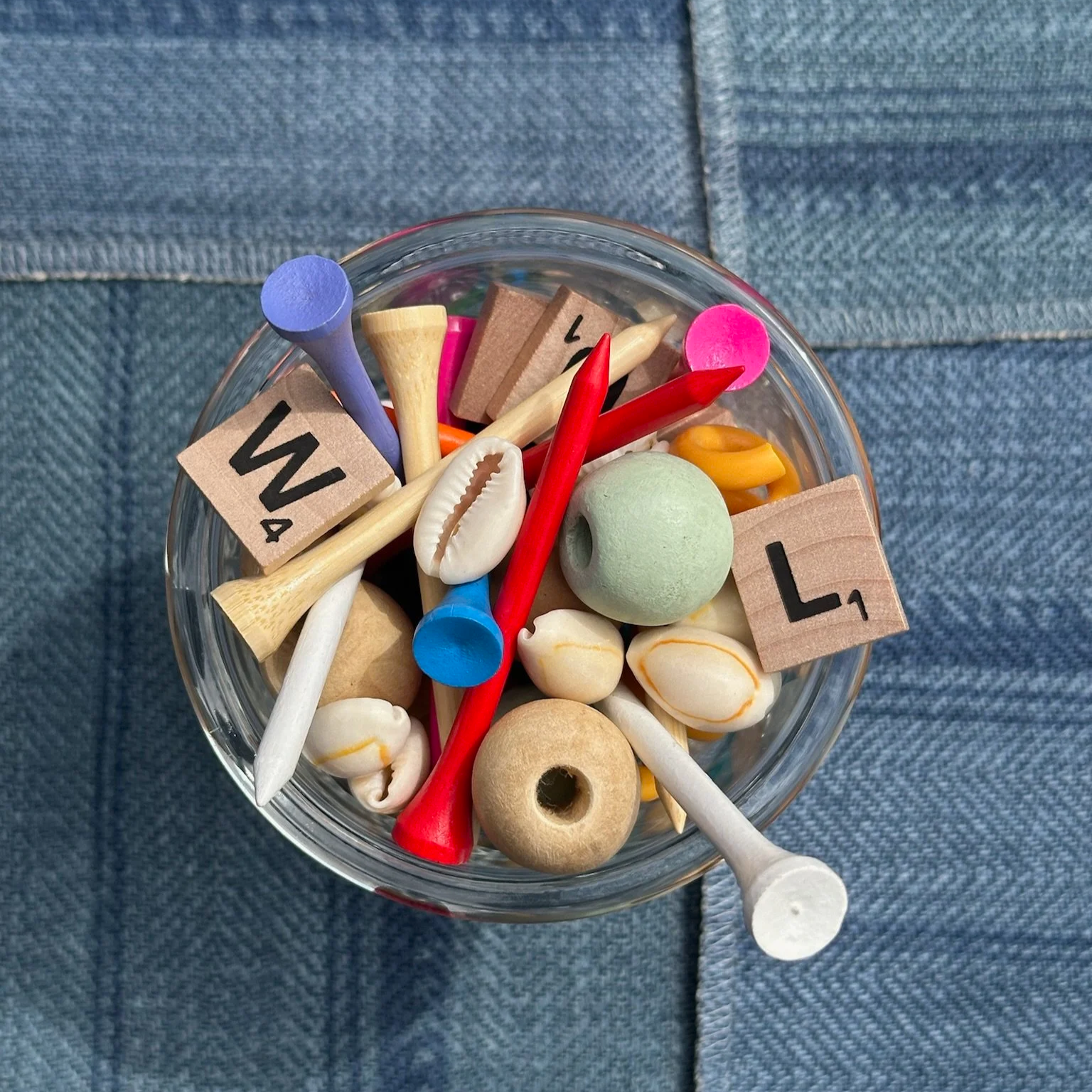
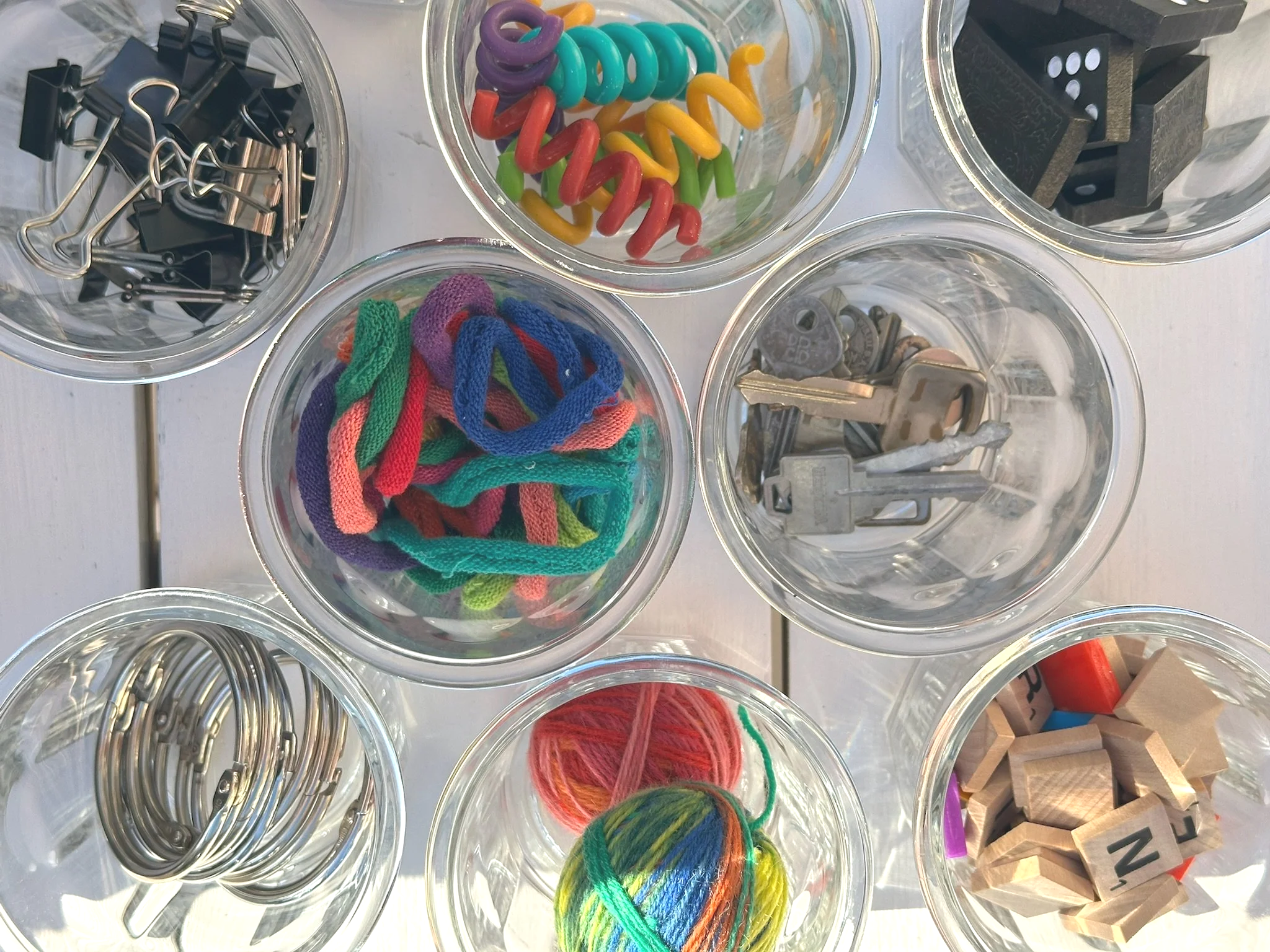
Loose parts are usually collections of open-ended materials that children can use in many types of play. They’re often repurposed items, things you would probably never think to call a “toy.” We might not know how to play with these as adults, but children do! It coaxes a very special creativity out of them. Below is a list of loose parts and how they show up in different kinds of play. (Bonus: check out a video of us using our own Rubbish Box here.)
Straws
Yogurt containers
Milk jugs
Cereal boxes
Shoe boxes
Clothing hangers
Bubble wrap
Wrapping paper rolls
Plastic utensils
Magazines
Styrofoam pieces
PVC pipe
Egg cartons
CDs
Bottle caps
Marbles
Bowls
Napkin rings
Pipe cleaners
Paper clips
Rulers
Loose parts fit into every kind of play
Imaginative Play: Loose parts aid in symbolic thought. In a play kitchen or small world zone, children will begin to use these items to represent other objects. Think about it, if you offer plastic cookies, hamburgers, and produce with a play kitchen, those things can only ever be a cookie, hamburgers, and produce. If you offer corks, buttons, and paper clips - those can be food one day, part of a building project the next, and used in a craft after that.
STEM Concepts: Because loose parts are so diverse, their properties vary drastically, which makes them a perfect candidate for categorizing, a fundamental math skill. Your child can sort by shape, color, size, material, you name it. Children can also explore ideas of conservation, volume and weight when working with different sized containers.
Fine Motor Skills: Unscrewing caps and pressing on lids takes hand strength, dexterity, and fine motor skills. Engaging with recycled materials helps children hone all of these abilities.
Practical Life Skills: Introducing recycled materials to young children allows them to practice skills they'll utilize their entire lives. Nobody outgrows zipping up a zipper or twisting open the peanut butter jar!