

Pinch Pots
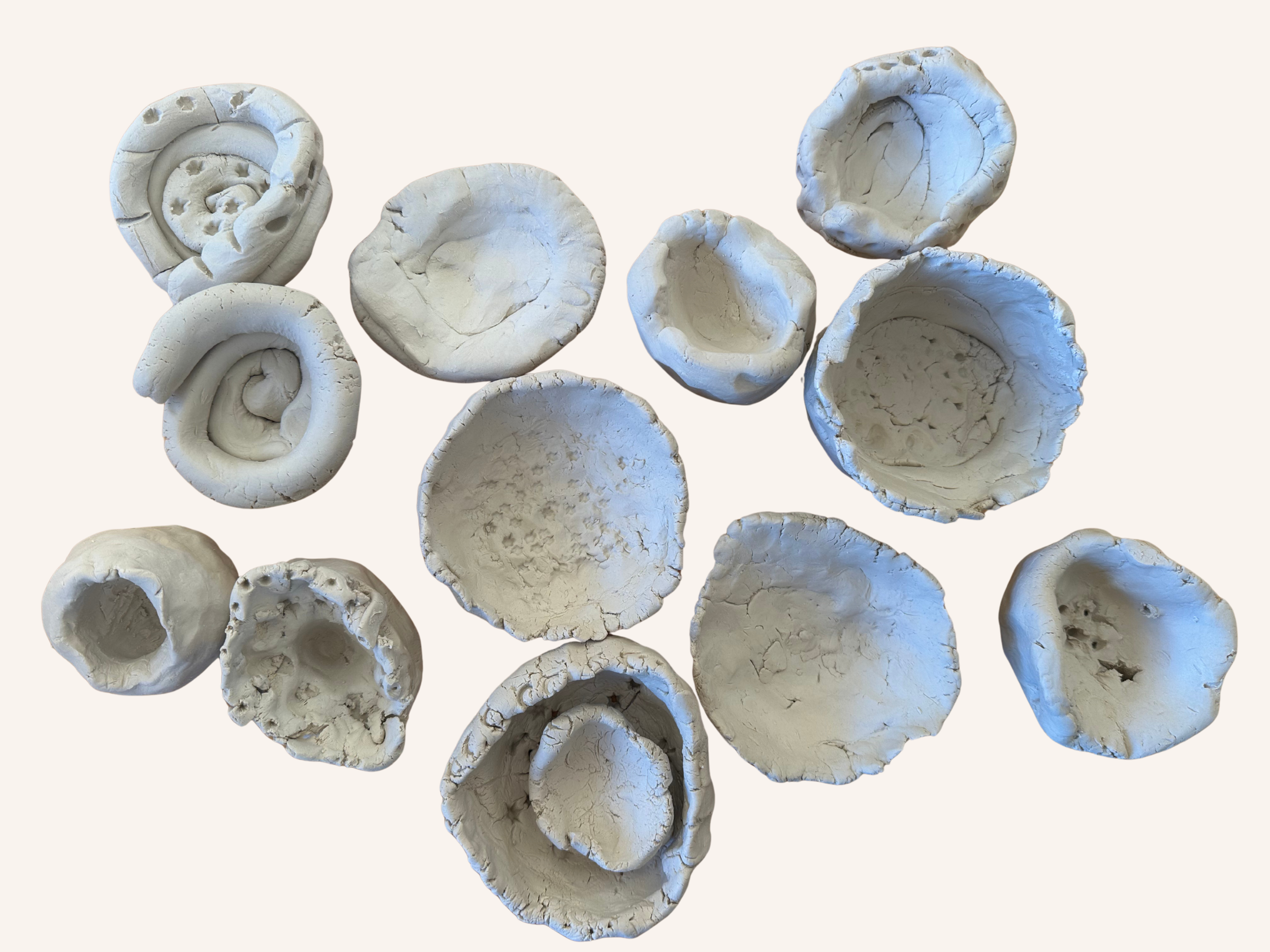
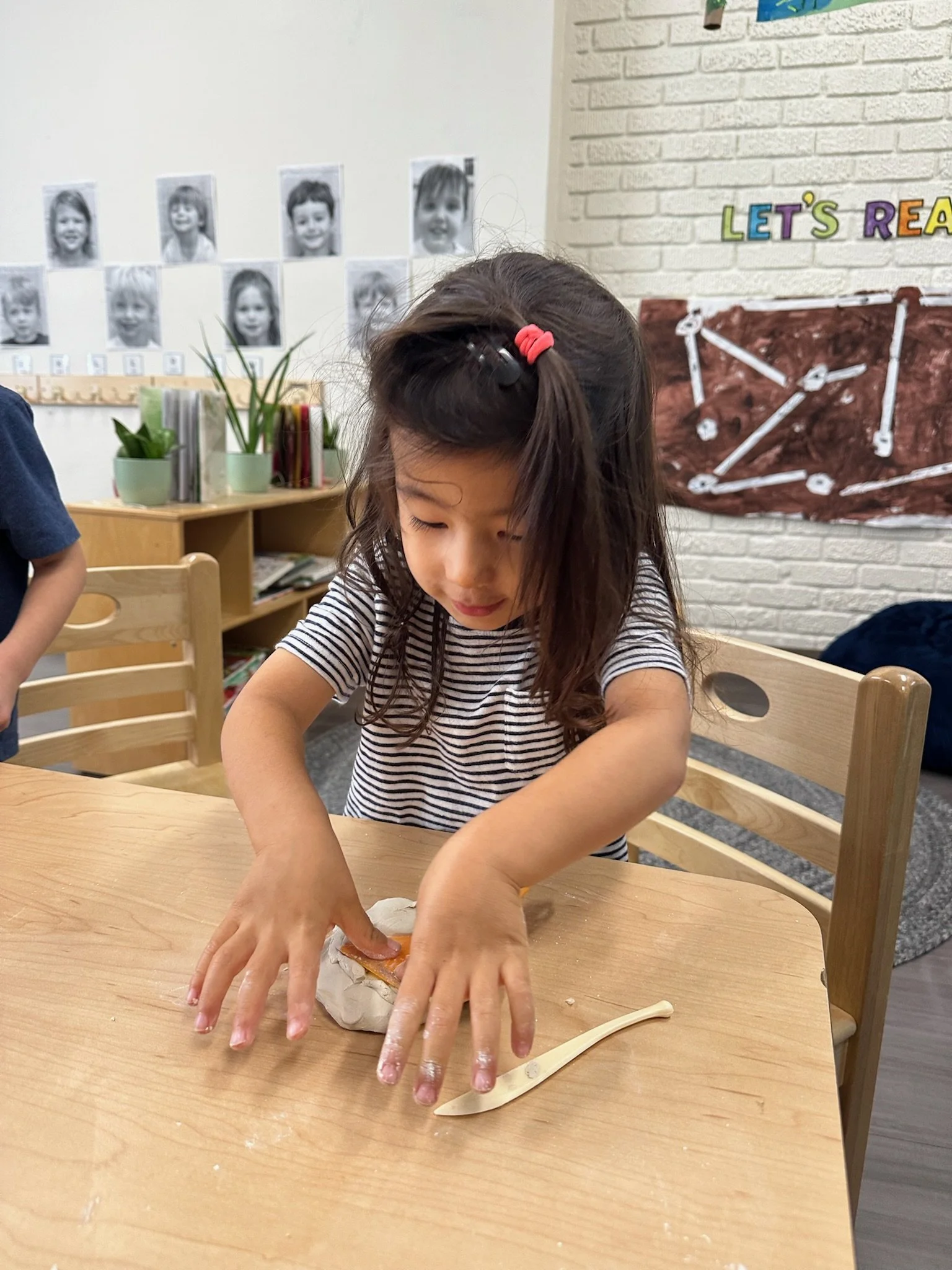
We made pinch pots and coiled bowls this week in Play Outside the Box! The objective of the class was to end up with a piece to paint eventually, but we like giving children the opportunity to get familiar with a new material for a while. So before demoing how to make these, we all sat down with our own little block of clay and “messed about.”
Once everyone had a feel for the clay, we showed them how to make two different kinds of bowls. See directions for both below in case you’d like to make some of these on your own at home!
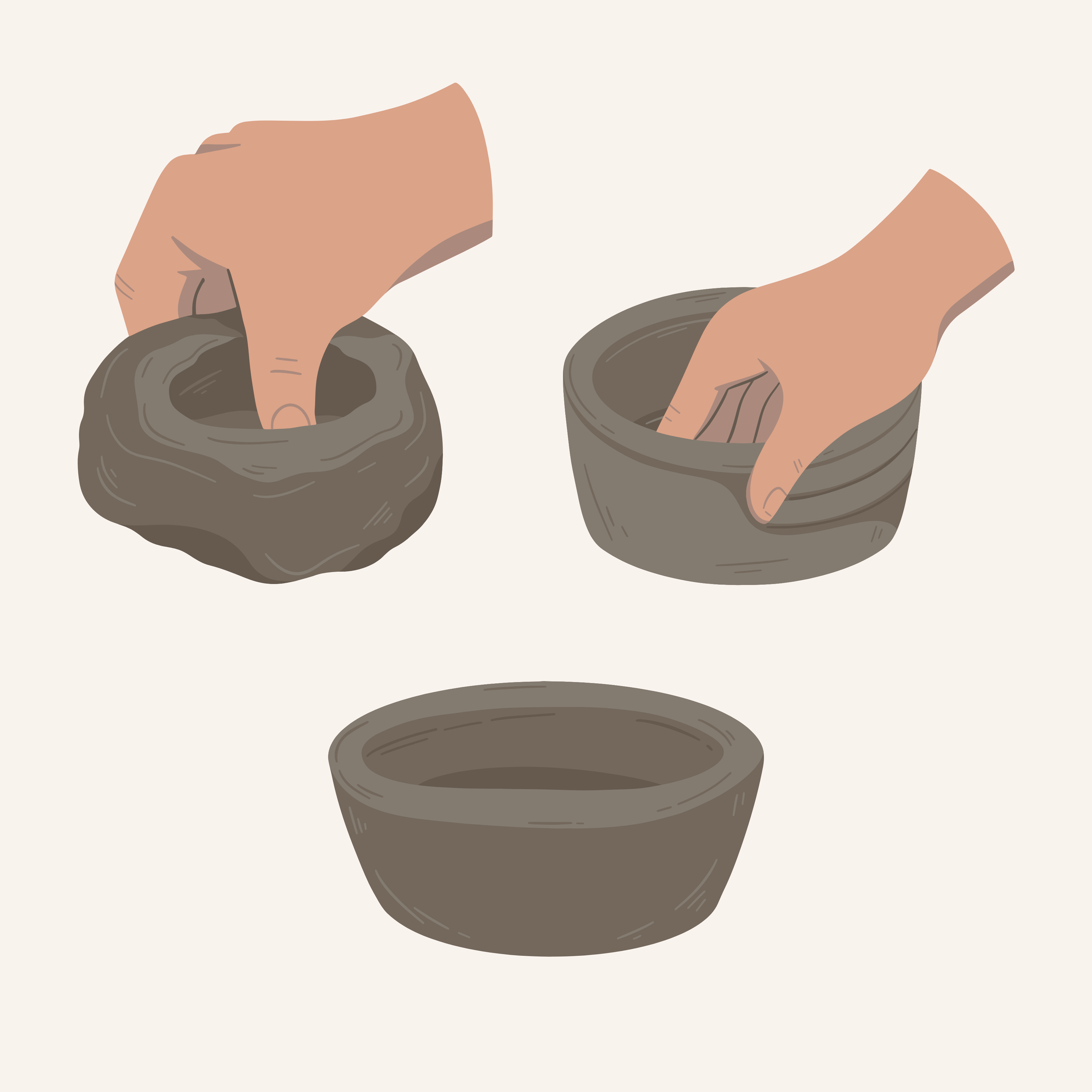
Pinch Pots
1) Roll your piece of clay into a ball.
2) Push your thumb into the center of the ball to make a hole, but don’t poke it all the way through!
3) Rotate the ball around your thumb and pinch your thumb and forefinger together as you go, slowly making the hole in the center larger.
4) Place your bowl on a flat surface and continue to pinch, ensuring the thickness of the bowl is consistent all the way around. Push down until the pinch pot has a flat surface on the bottom as well.
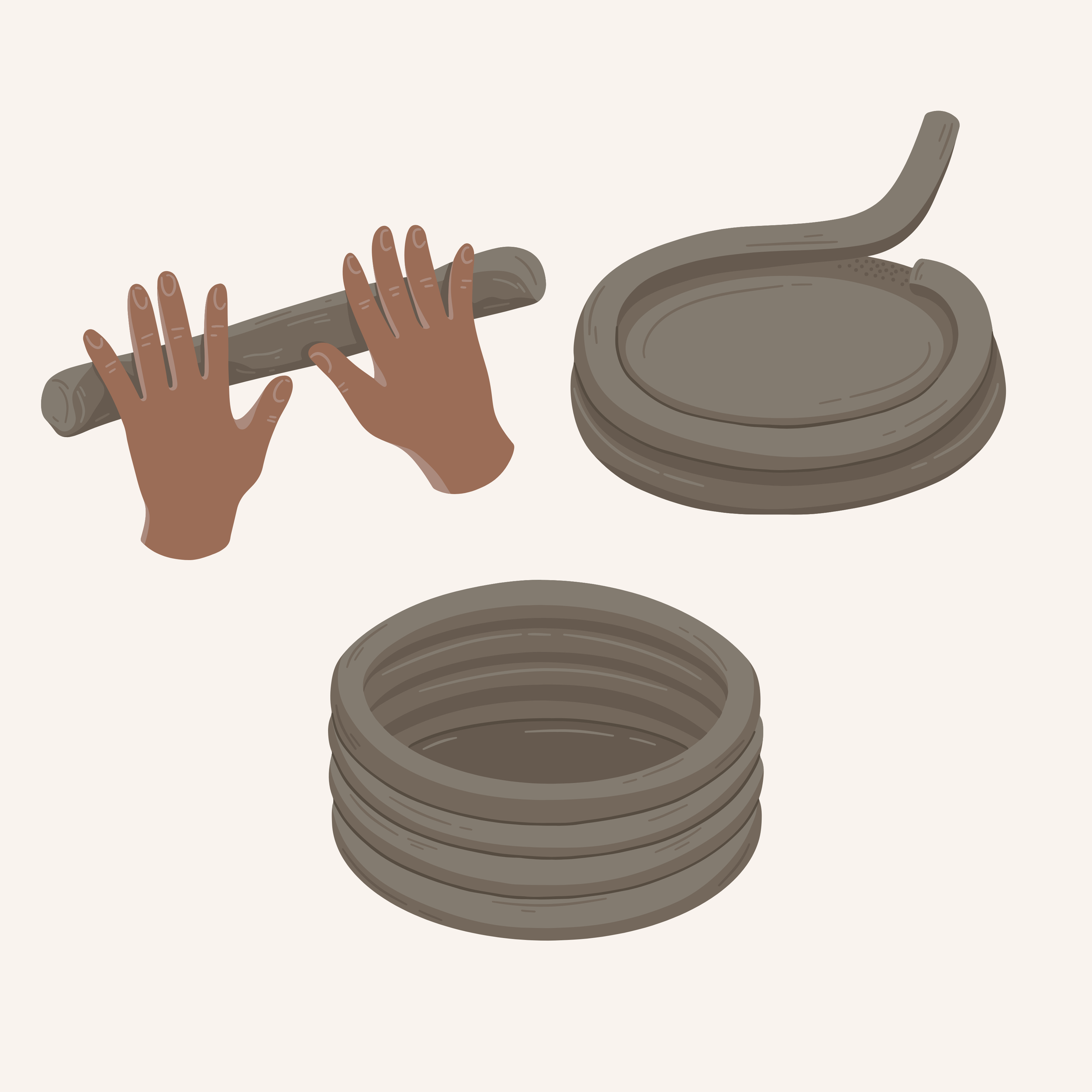
Coiled Bowls
1) Roll your piece of clay into a long, snake-like shape.
2) Take one end and roll it into itself until the circle you’ve coiled is about 1.5” in diameter.
3) Once you have a coiled based, begin rolling the same piece upward so it creates a wall along the circumference of your base.
4) Continue this until the whole of your snake-like shape is coiled. Voilà!
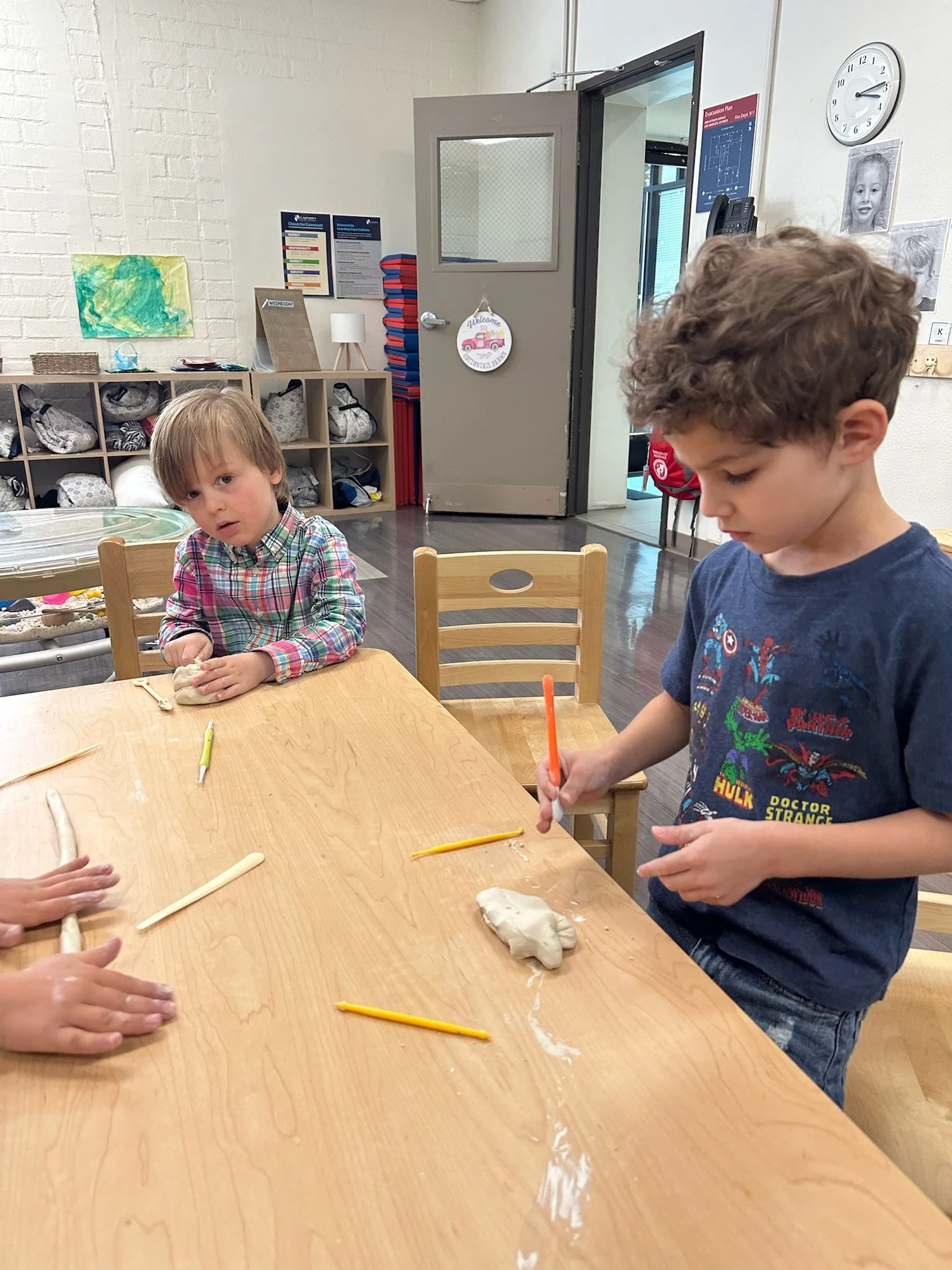
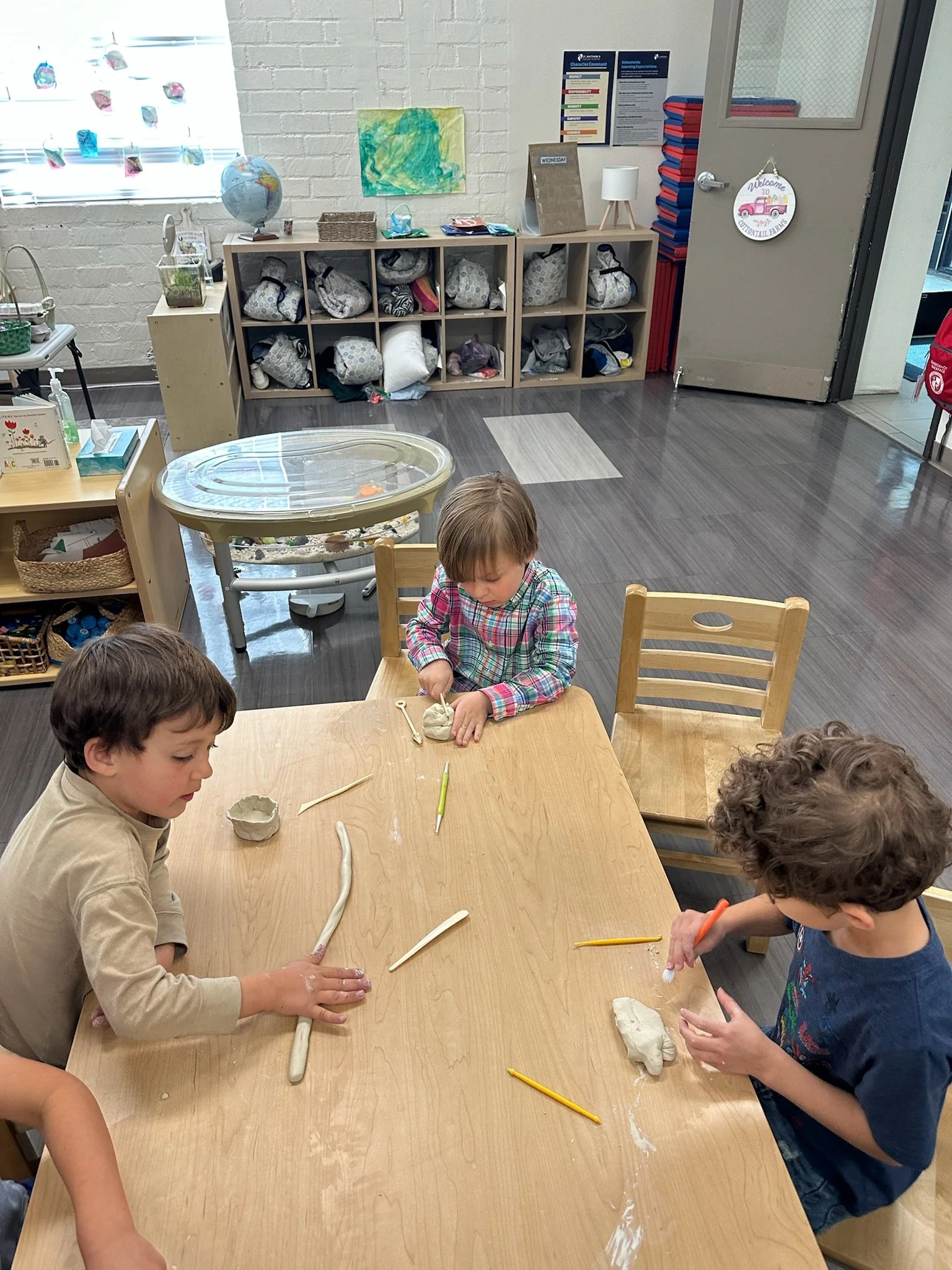
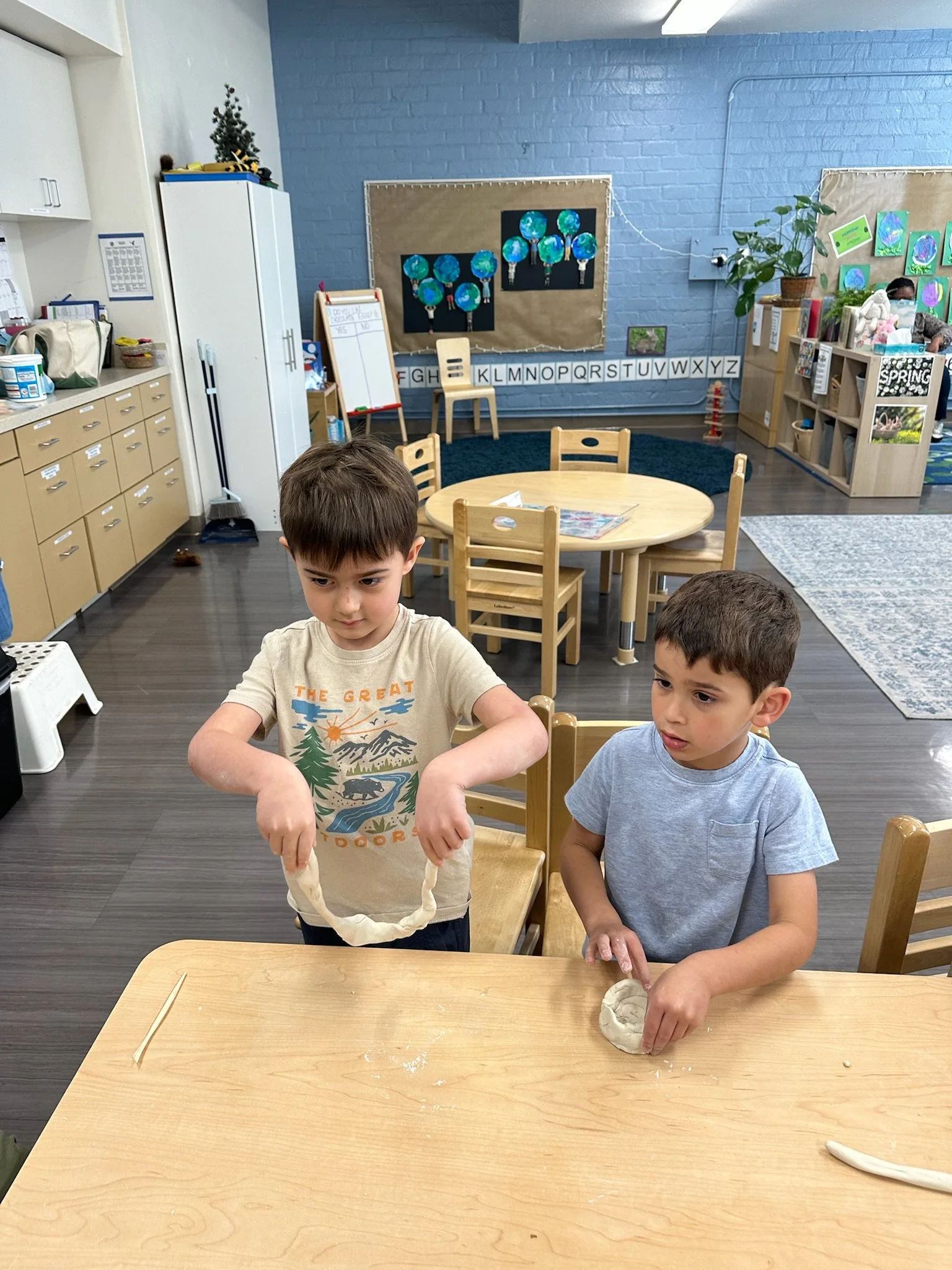
Product-Oriented Learning vs Process-Oriented Learning
There are two types of learning we can facilitate as educators. Product-oriented learning focuses on the outcome and generally has a narrow definition of success. You could expect to see this in more academic settings where there really is only one right answer! Think mathematics, history, grammar. But it can also show up in more creative spaces. A great example of this is the classic Thanksgiving-Hand-Turkey-Craft. Even if 20 kids are partaking, they’ll generally all look the same. This can be great for practicing instruction following!
Process-oriented learning is about the skills acquired and problem solving that takes place during a project. There’s a lot of room for creativity and self expression here. The final results might not always make it on the fridge, but there’s usually much more differentiation in these kinds of creations than with product-oriented learning.
We love process!!!
Sometimes we will blend the two by offering inspiration for projects and also allowing for pivots. If a child is having the time of their life sculpting a plate instead of a bowl, or they’re working on something that (candidly) won’t be paintable at all, but they’re curious and engaged and pushing through frustration as they work, then that’s worth it to us! This is a better outcome than a pretty craft at the end of it all. We’re so excited for this class :)